The challenge is knowing where to act without creating unnecessary risk. That is why pricing and revenue decisions need more than instinct, static rules, or broad price changes. They need a clearer view of customer value, price sensitivity, retention risk, and long-term profitability.
The Role of Revenue Optimization
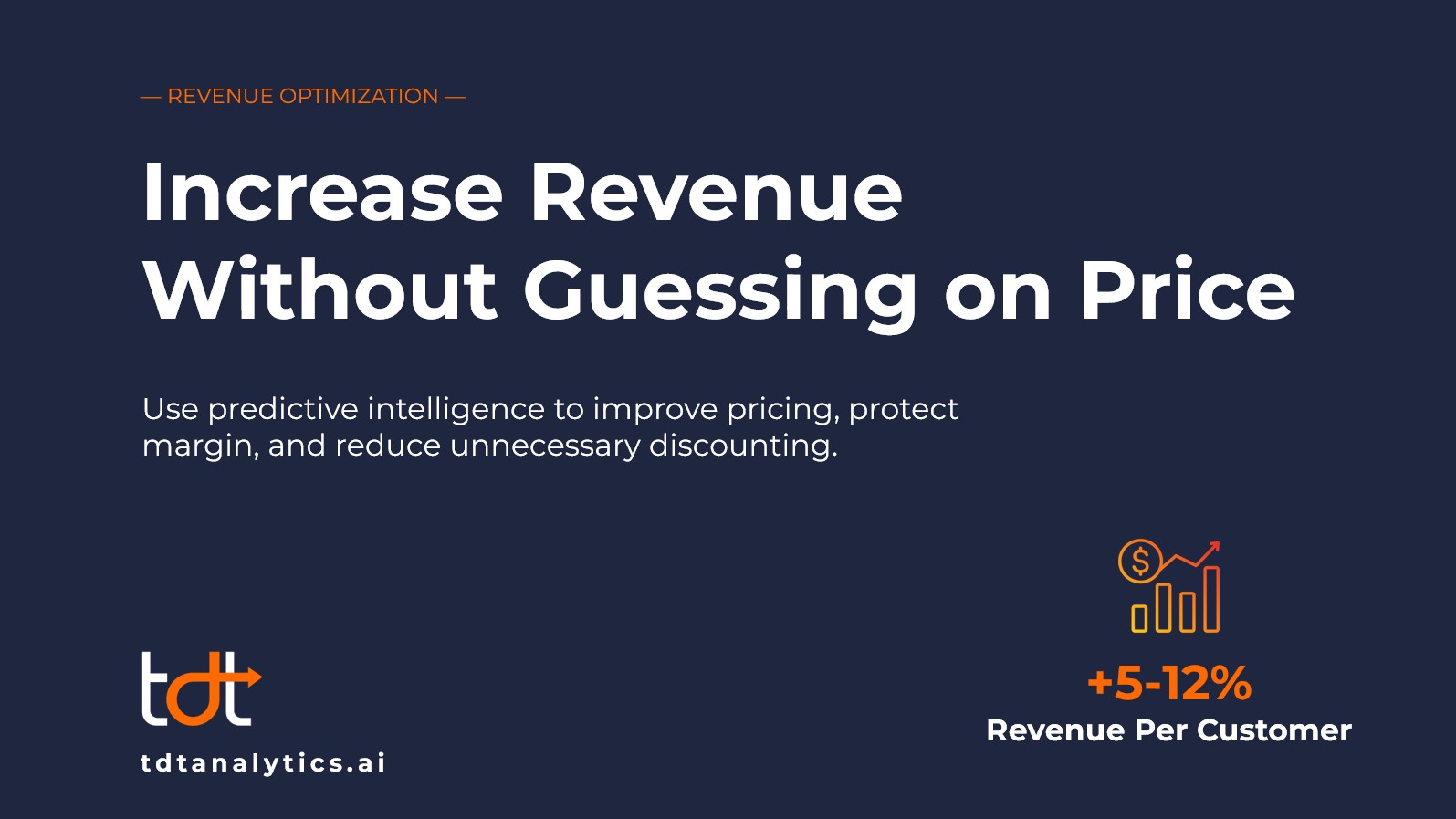
Revenue Optimization helps organizations identify where revenue can be increased across the customer base, which segments can absorb change, and how pricing decisions can improve performance without eroding long-term value.
The goal is not blanket price increases. It is smarter, more targeted revenue action.
Key idea
Better pricing is not about charging more everywhere. It is about knowing where value exists, where risk exists, and where action will create the strongest return.
A Stronger Pricing Strategy Asks Better Questions
Pricing and revenue decisions become stronger when leaders can move beyond assumptions and ask more precise questions about customer value, risk, and opportunity.
- Which customer segments are most price sensitive?
- Where can pricing or packaging change safely?
- Which accounts should be protected from repricing?
- Where are discounts reducing margin without improving retention?
- Which offers create the best balance between revenue, margin, and customer value?
Where Predictive Analytics Becomes Practical
Predictive analytics helps organizations analyze customer behavior, pricing response, retention sensitivity, and value potential. This allows leaders to model different revenue scenarios before acting.
Instead of relying on broad assumptions, organizations can better understand the trade-offs between price, margin, churn risk, and customer lifetime value.
Revenue optimization helps organizations:
- Identify pricing and margin opportunities
- Understand customer price sensitivity
- Model revenue scenarios before acting
- Reduce margin leakage from unnecessary discounts
- Balance revenue growth with retention risk
Revenue Optimization Connects With Customer Intelligence
Revenue optimization does not work in isolation. It connects closely with other areas of customer intelligence.
Churn prediction helps identify which customers may be at risk if pricing changes are handled poorly. Next-Best-Product Intelligence helps reveal where growth may come from a better offer, bundle, or product recommendation rather than a price change.
Smart Predictive CRM helps teams turn recommendations into action inside daily workflows. Live KPI Dashboards help leadership track results, monitor risk, and refine decisions over time.
From Isolated Pricing Decisions to a Complete View of Customer Value
Together, these capabilities move revenue management away from isolated pricing decisions and toward a more complete view of customer value.
For leadership teams, the opportunity is not simply to increase prices. It is to understand where pricing, packaging, offers, and customer treatment can create better outcomes — with less guesswork and more visibility.
Better pricing is not about charging more everywhere. It is about knowing where value exists, where risk exists, and where action will create the strongest return.