Most organizations only recognize churn after the customer has already reduced usage, disengaged, or left. By that point, the opportunity to intervene is often limited. Predictive churn analytics changes that by helping teams identify risk earlier, prioritize the right accounts, and take action before revenue is lost.
Why Churn Is a Revenue Protection Problem
Customer churn directly affects revenue, profitability, and long-term growth. When high-value customers leave, organizations lose not only current revenue, but also future product adoption, expansion, and relationship value.
Traditional reporting can show which customers have already left. Predictive analytics goes further by identifying which customers are showing early signs of risk.
Key idea
The goal is not simply to reduce churn after it happens. The goal is to detect risk early enough to influence the outcome.
Why Traditional Reporting Finds Churn Too Late
Dashboards and historical reports are useful for understanding past performance. They can tell leaders how many customers churned, which segments declined, and where revenue was lost.
But they cannot always answer the more important forward-looking questions:
- Which customers are most likely to leave next?
- Which accounts should retention teams prioritize first?
- Which customers are worth saving based on lifetime value?
- Which action is most likely to improve the relationship?
How Predictive Churn Analytics Works
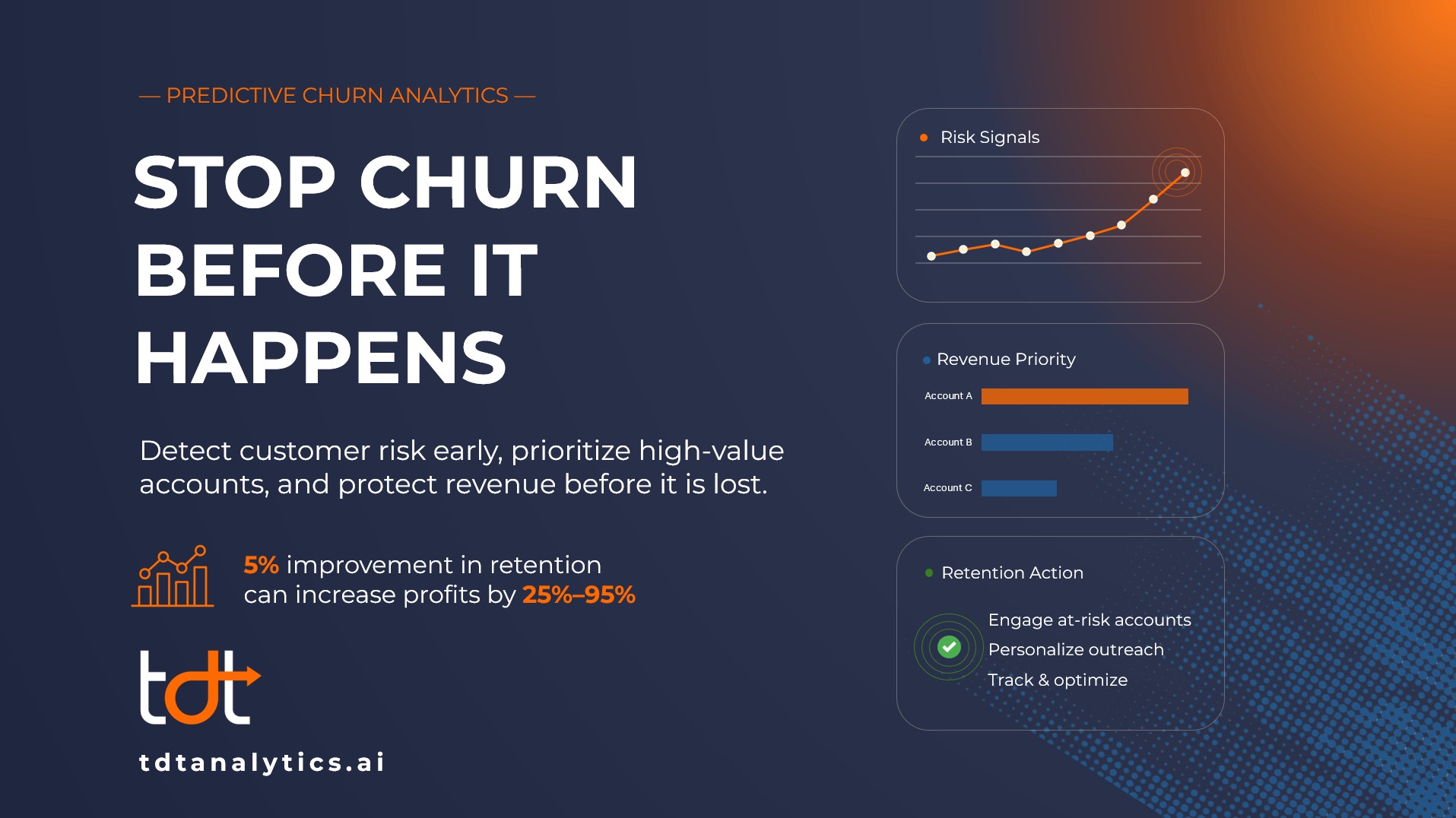
Predictive churn analytics uses customer, transaction, behavioral, and engagement data to identify patterns that often appear before a customer leaves. These signals may include declining usage, reduced transaction activity, lower engagement, unresolved service issues, or changes in product behavior.
Instead of treating all customers the same, predictive models assign risk scores and help teams understand where intervention is most urgent.
Predictive churn analytics helps organizations:
- Identify at-risk customers earlier
- Prioritize high-value accounts
- Recommend targeted retention actions
- Improve customer lifetime value
- Protect recurring revenue before it is lost
From Risk Signals to Retention Action
A churn score alone is not enough. The real value comes when predictive insight is connected to action. Teams need to know who is at risk, why they are at risk, what the customer is worth, and what action should happen next.
This is where predictive analytics becomes operational. It can support retention campaigns, customer success workflows, CRM prioritization, and executive visibility into revenue risk.
How TDT Analytics Helps
TDT Analytics helps organizations transform customer and transaction data into forward-looking retention intelligence. By combining predictive churn scoring, customer value segmentation, and action-oriented insights, TDT helps teams move from reactive reporting to proactive revenue protection.