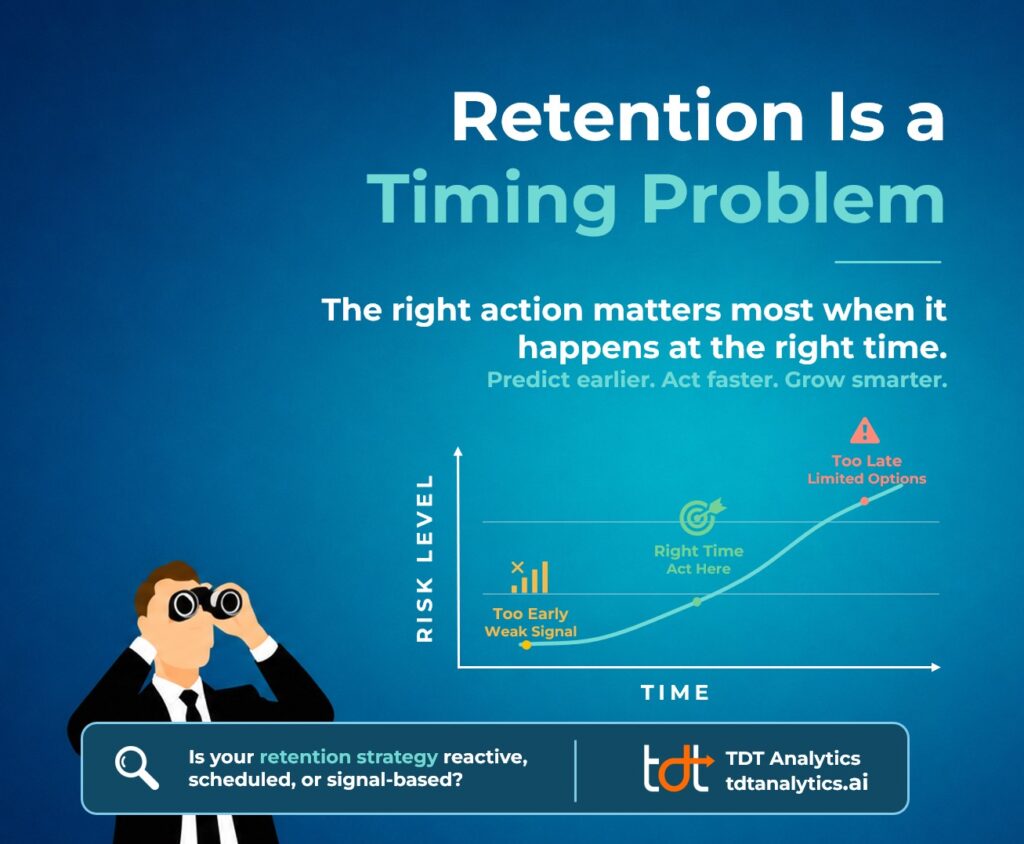
Retention is not only about knowing which customers are at risk. It is also about knowing when to act. If outreach happens too early, the signal may not be strong...
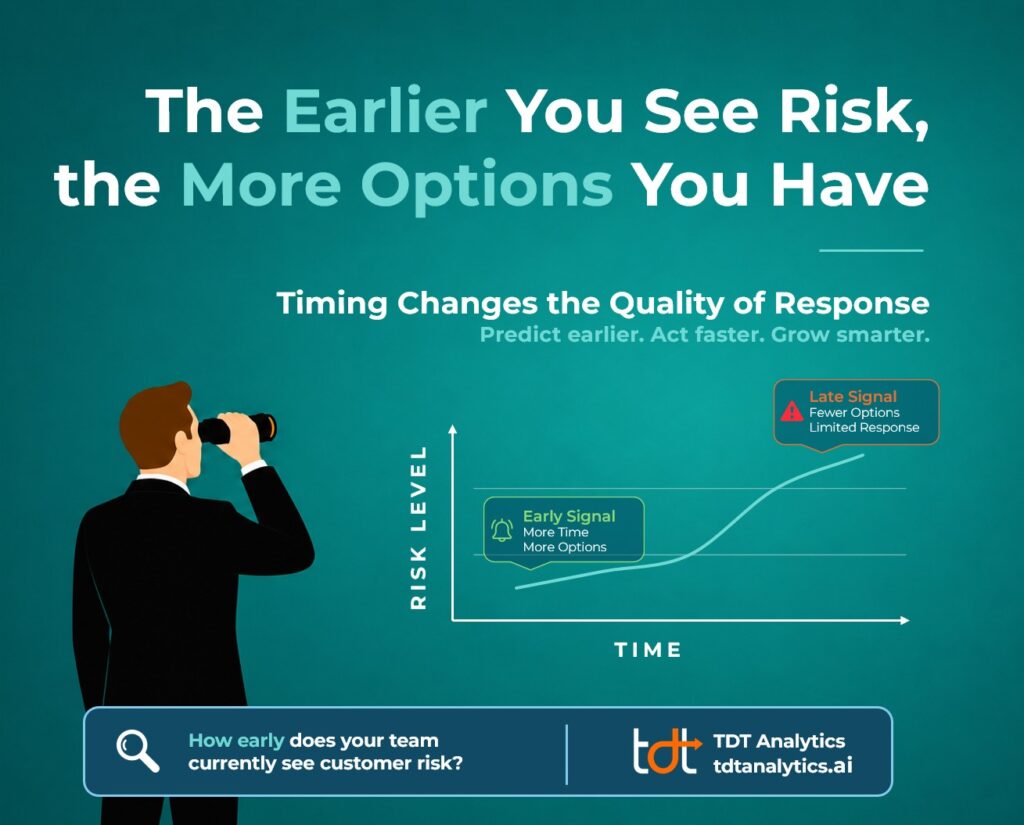
The earlier a business sees customer risk, the more options it has. When risk is detected too late, the response is usually limited: discounts, recovery calls, or last-minute retention efforts....
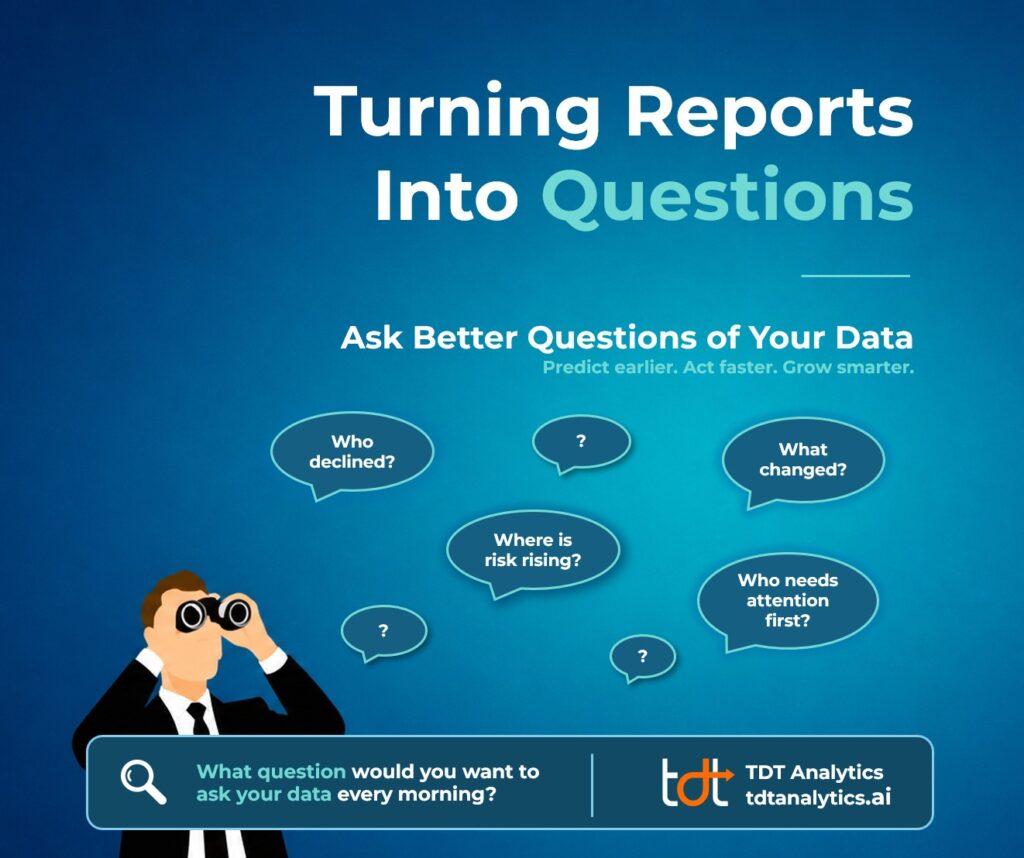
The next evolution of BI is not only better dashboards. It is the ability to ask better business questions. Instead of manually filtering reports, users should be able to ask:...
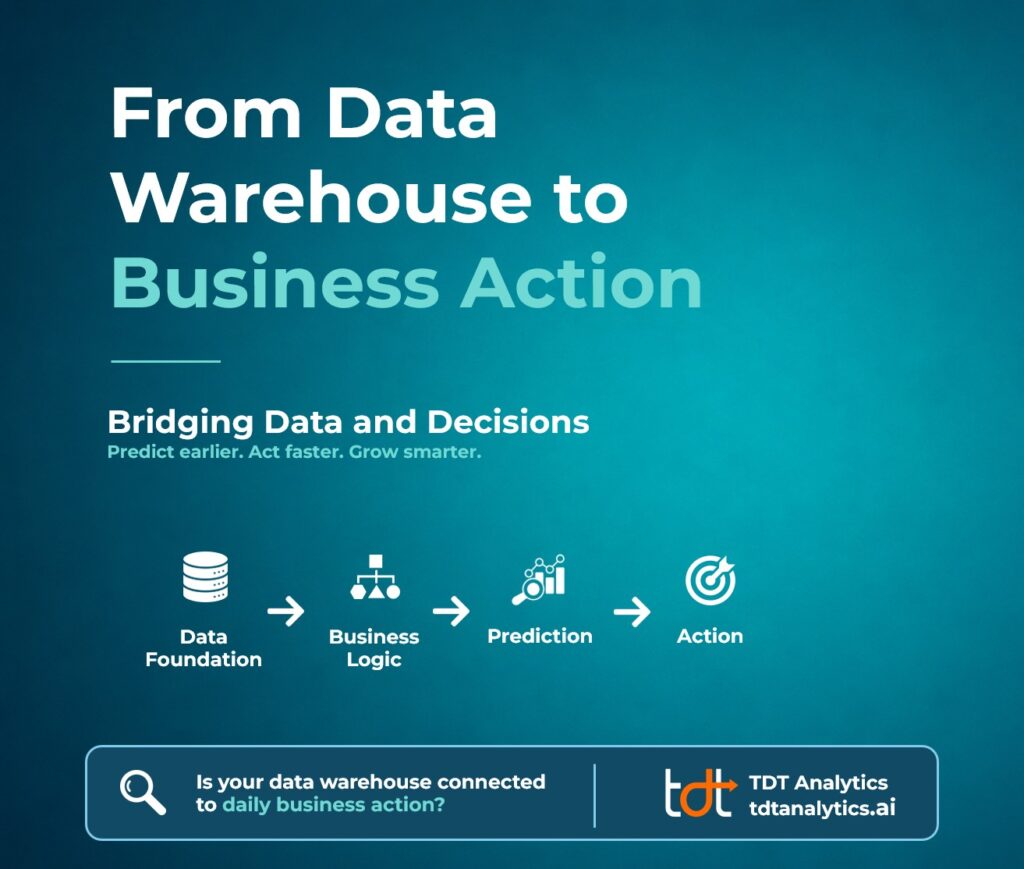
A data warehouse is only valuable if the business can act on it. Tables, views, and historical data are the foundation. But business teams need answers like: Which accounts are...
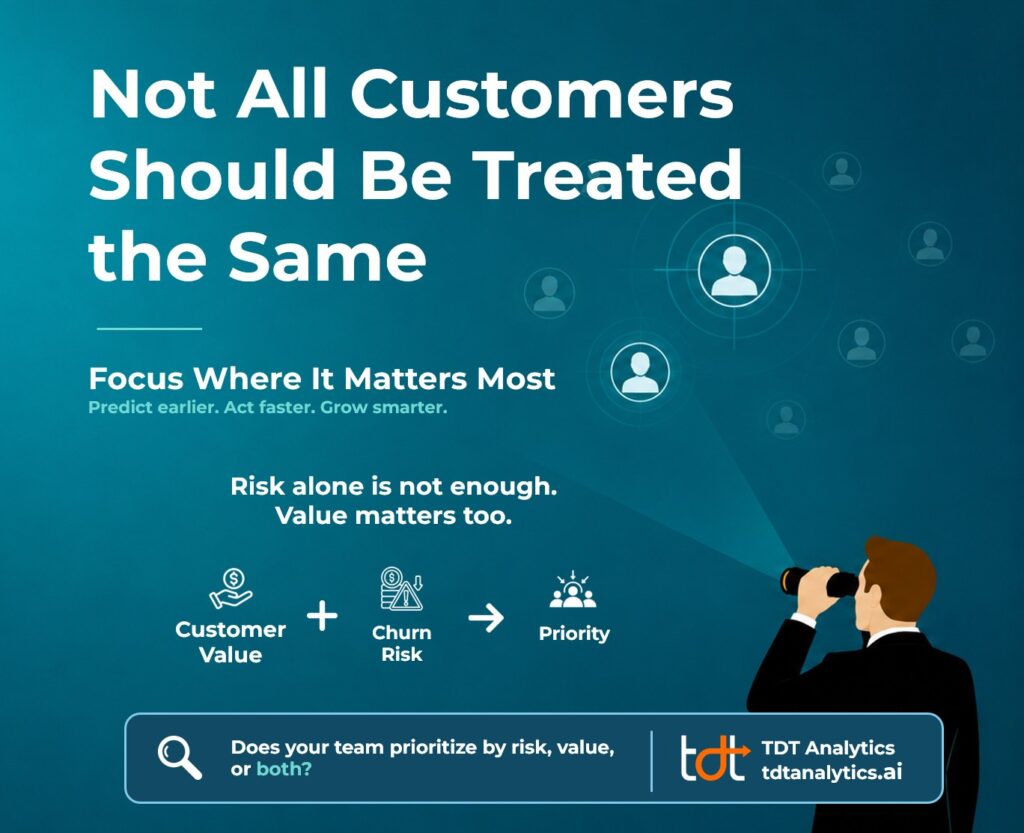
One common mistake in retention strategy is treating every customer risk equally. But not every customer has the same value. Not every risk requires the same response. Not every account...
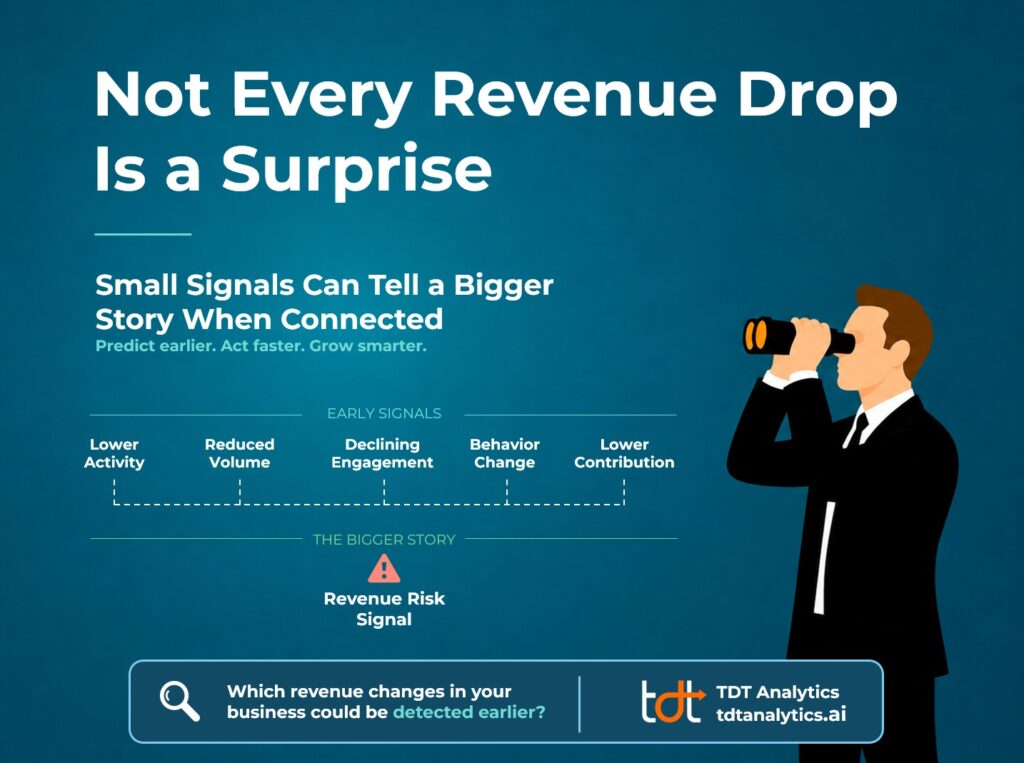
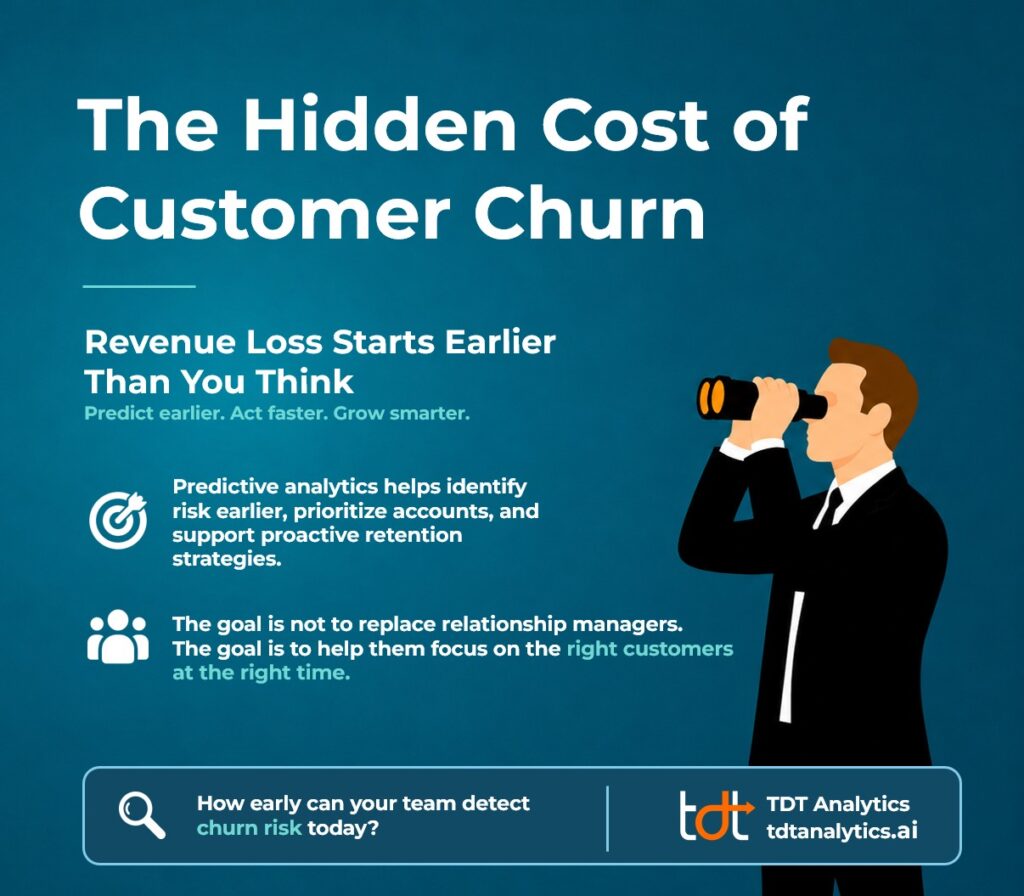
Customer churn is rarely a single event. Usually, it leaves signals first: Lower activity Reduced transaction volume Delayed engagement Support issues Changes in behaviour Declining revenue contribution The problem is...
Churn feels unexpected when you only look backward If churn still surprises your teams, it’s a signal your analytics are backward-looking. Traditional BI highlights outcomes after the fact. Predictive analytics...
Retention is a strategic growth lever, not a CX metric Retention has moved from an operational metric to a board-level growth lever. As acquisition costs rise, protecting lifetime value matters...
Predictive analytics prevents churn;Rear-view analytics only explains it. Machine learning and predictive analytics surface early warning signals in customer behavior weeks before churn occurs. That creates time to intervene with...